
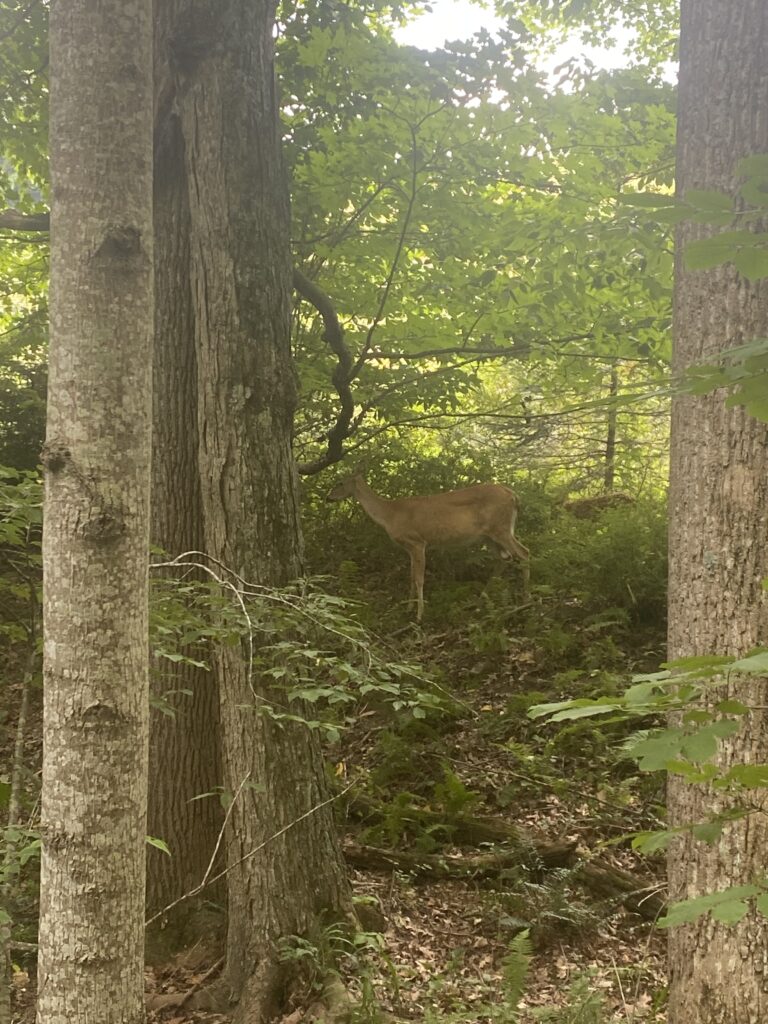
In a world that increasingly revolves around screens, deadlines, and digital connection, the quiet healing power of trees is making a surprising comeback. Forest therapy, also known as Shinrin-yoku or “forest bathing,” is gaining attention across the UK and USA—not as a whimsical wellness trend but as a scientifically validated method of relieving stress, anxiety, and even symptoms of depression. This isn’t about hiking or exercise; it’s about slow, mindful immersion in nature, engaging all the senses to foster a deep sense of calm and mental clarity.
The practice originated in Japan in the 1980s, when public health officials noticed a rise in stress-related illness. They developed forest bathing as a preventive health strategy. Decades later, researchers globally—including those in Britain and the U.S.—have found the science backs it up. Studies show spending time in a forest can reduce cortisol levels (our primary stress hormone), lower blood pressure, and boost natural killer (NK) cell activity, which supports immune function. These aren’t fleeting effects—they can last for days after even a short forest therapy session (Park et al., 2010).
More compelling is the link between forest bathing and improved mental health. One 2021 UK-based study published in Ecopsychology found that participants engaging in nature-based mindfulness reported significant reductions in depression, anxiety, and rumination compared to those receiving traditional indoor therapy (Fisher et al., 2021). Similarly, the University of Michigan discovered that just 20 minutes in nature significantly lowered cortisol levels—even without structured activity (Hunter et al., 2019). It’s no wonder therapists and clinicians are increasingly recommending time in green spaces as a complementary treatment.
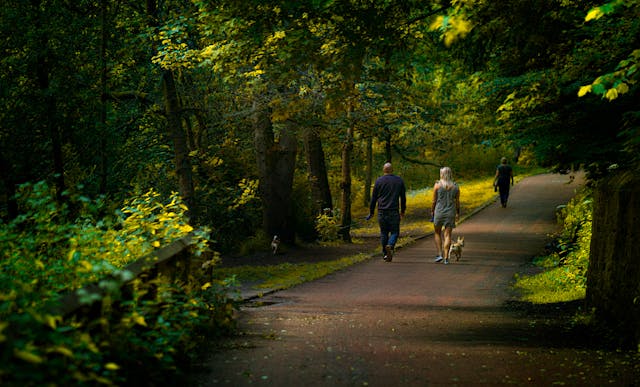
In the UK, organisations like The Forest Bathing Institute are working with the NHS to integrate this natural therapy into mental health care. Public woodlands such as the New Forest in Hampshire, Sherwood Forest in Nottinghamshire, and Brecon Beacons in Wales offer easy access to tranquil environments perfect for forest bathing. Across the Atlantic, U.S. programs like Nature and Forest Therapy International are training guides to lead mindful walks in state parks and wilderness areas, helping to bring nature back into clinical wellness practices.
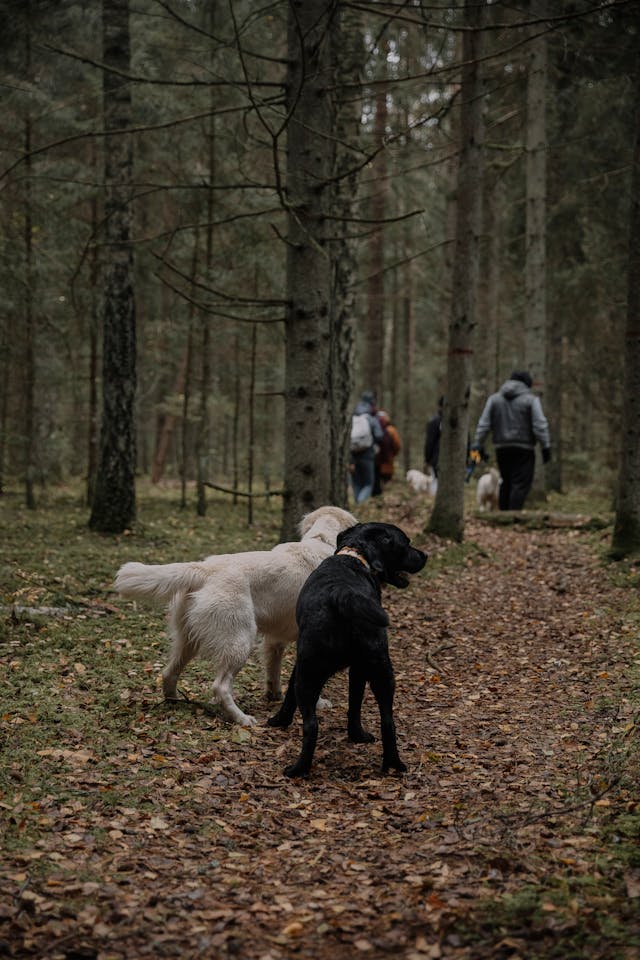
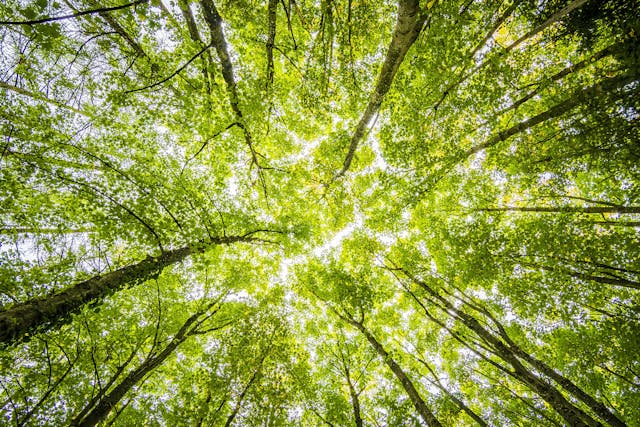
But why does walking slowly among trees have such a powerful impact on our emotional state? Trees release phytoncides—natural antimicrobial compounds—that we inhale during forest visits. These molecules appear to support immune function and mood regulation. The sound of rustling leaves, birdsong, and the filtered light through a canopy engage our senses in a way modern environments rarely do. These sensory experiences lower activity in the prefrontal cortex—the part of the brain responsible for overthinking and worry.
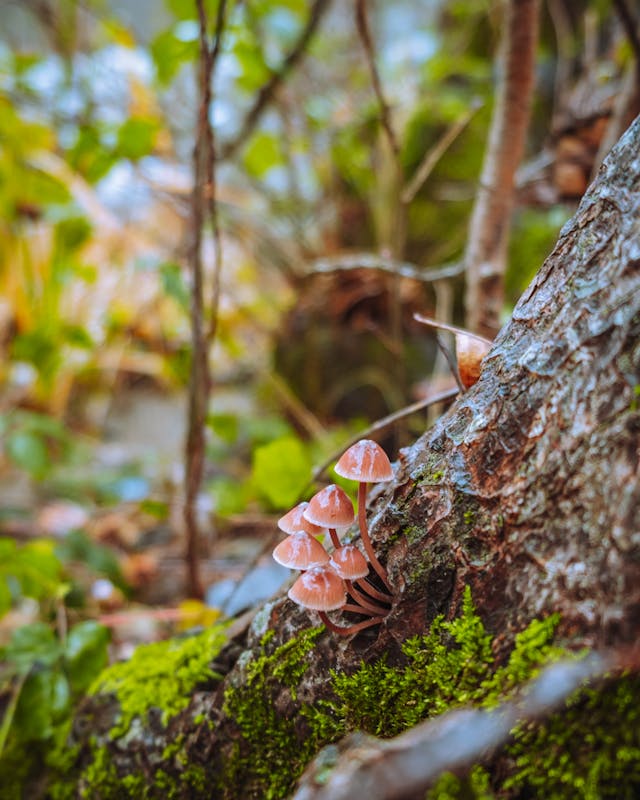
Importantly, forest therapy isn’t just about mental health—it encourages a reconnection with the earth. People report feeling more grounded, more connected to something larger than themselves. In a time of global stress, disconnection, and climate concern, forest therapy offers a double gift: it heals us while deepening our respect for nature. It invites us to protect the spaces that protect us.

Whether you’re sitting beneath an ancient oak in the Welsh countryside or walking through misty redwoods in Northern California, the experience is universal—calm, curiosity, and clarity. Forest therapy isn’t a luxury; it’s a return to what we’ve always needed. And perhaps now, more than ever, it’s the antidepressant our anxious society truly craves.
Love Life & Discover Yourself x
References
- Park, B. J., Tsunetsugu, Y., Kasetani, T., Kagawa, T., & Miyazaki, Y. (2010). The physiological effects of Shinrin-yoku (taking in the forest atmosphere or forest bathing): evidence from field experiments in 24 forests across Japan. Environmental Health and Preventive Medicine, 15(1), 18–26.
- Hunter, M. R., Gillespie, B. W., & Chen, S. Y. P. (2019). Urban nature experiences reduce stress in the context of daily life based on salivary biomarkers. Frontiers in Psychology, 10, 722.
- Fisher, M., Balfour, R., & Moss, S. (2021). Mental health and nature: How connecting with nature benefits our mental health. Ecopsychology, 13(1), 1–11.
- The Forest Bathing Institute (UK) – www.forestbathinginstitute.world
- Association of Nature and Forest Therapy Guides (USA) – www.natureandforesttherapy.org