
Exploring Nature’s Medicine: Plants and Fungi
Continue your journey with nature’s medicine:
If you haven’t already, read Part 1: Healing Plants – Nature’s Daily Remedies to discover how turmeric, lavender, echinacea, and cannabis support your health.
Nature has long provided humanity with powerful remedies, from the colourful fields of medicinal plants to the hidden world of healing fungi. While plants like turmeric, lavender, and cannabis have shaped our daily wellness practices, fungi such as reishi, lion’s mane, and chaga offer unique bioactive compounds that support immunity, cognition, and overall vitality. Together, they form a holistic toolkit that modern science is only beginning to fully understand. In this series, we explore the evidence-based benefits, mechanisms, and safe usage of these remarkable natural therapies, revealing how the natural world continues to shape human health.
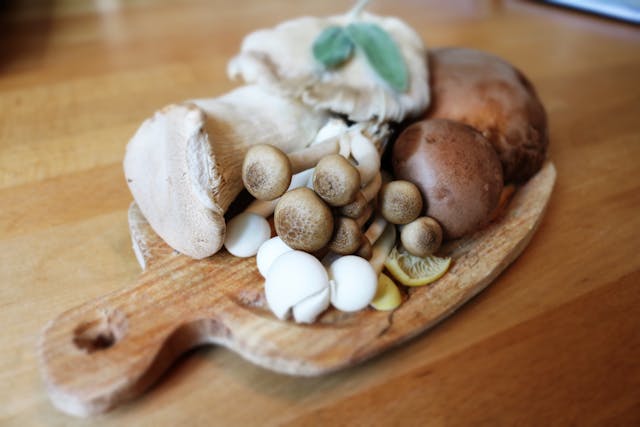
While plants have long dominated our attention for their medicinal properties, fungi remain a largely untapped reservoir of health-promoting compounds. From traditional Asian medicine to modern nutraceuticals, medicinal mushrooms have shown remarkable potential in supporting immunity, cognition, and overall well-being. Their bioactive compounds—polysaccharides, terpenoids, and polyphenols—interact with the body in ways that are only beginning to be fully understood.
Reishi (Ganoderma lucidum), often called the “mushroom of immortality,” has a long history in traditional Chinese medicine. Its polysaccharides and triterpenoids exhibit potent antioxidant, anti-inflammatory, and immune-modulating effects. Clinical studies suggest reishi may enhance immune function by stimulating natural killer cells and modulating cytokine production, while also supporting cardiovascular health and potentially inhibiting tumor growth.
Lion’s Mane (Hericium erinaceus) is gaining attention for its neuroprotective properties. Compounds such as hericenones and erinacines stimulate the production of nerve growth factor (NGF), essential for the maintenance, growth, and survival of neurons. Preliminary studies indicate that Lion’s Mane may improve cognitive function, memory, and mood, making it a promising natural option for age-related cognitive decline.
Chaga (Inonotus obliquus) is a fungus rich in polyphenols, melanin, and other antioxidants that combat oxidative stress. Traditional use in Siberia and Eastern Europe emphasized its role in longevity and vitality. Modern research highlights its potential for supporting immune health, reducing inflammation, and protecting cells from oxidative damage.
Cordyceps (Cordyceps sinensis), prized for centuries by Tibetan and Chinese healers, has demonstrated adaptogenic properties, enhancing endurance and reducing fatigue. Active compounds like cordycepin may improve cellular energy production and modulate inflammatory pathways, offering benefits for both athletic performance and overall vitality.
Despite these promising effects, medicinal fungi remain underutilized in many parts of the world. Factors include unfamiliarity with preparation methods, limited availability of high-quality sources, and the perception that modern pharmaceuticals are more “reliable.” Additionally, research is ongoing, and while clinical studies are increasing, public awareness often lags behind scientific discoveries.
Safe incorporation of medicinal mushrooms into daily life requires careful sourcing and education. Opting for organic, sustainably harvested products—whether as teas, powders, or standardized extracts—ensures both efficacy and safety. Consulting with healthcare professionals is advisable, particularly for individuals with pre-existing conditions or those taking medications, to avoid potential interactions.
In conclusion, medicinal fungi offer a treasure trove of bioactive compounds capable of enhancing immunity, cognitive function, and overall health. From the neuroprotective Lion’s Mane to the immune-boosting Reishi, these natural therapies exemplify the untapped potential of fungi. By integrating them safely into modern health practices, we can reconnect with a tradition that has been quietly sustaining human wellness for centuries.
Love Life x
References:
- Wasser SP. Medicinal mushrooms as a source of antitumor and immunomodulating polysaccharides. Applied Microbiology and Biotechnology. 2002;60(3):258-274.
- Mori K, Inatomi S, Ouchi K, Azumi Y, Tuchida T. Improving effects of the mushroom Yamabushitake (Hericium erinaceus) on mild cognitive impairment: a double-blind placebo-controlled clinical trial. Phytotherapy Research. 2009;23(3):367-372.
- Luo H, et al. Inonotus obliquus polysaccharides: a review of chemical composition, bioactivity, and applications. Food & Function. 2019;10(10):5854-5870.
- Holliday J, Cleaver M, Loomis-Powers M, et al. Cordyceps spp.: A Review of Its Traditional Uses, Bioactive Compounds, and Clinical Evidence. Frontiers in Pharmacology. 2019;10:1-16.
- Tzeng TY, et al. Immunomodulatory Effects of Ganoderma lucidum (Reishi) Extract in Human Volunteers: A Pilot Study. International Journal of Medicinal Mushrooms. 2011;13(5):429-436.