
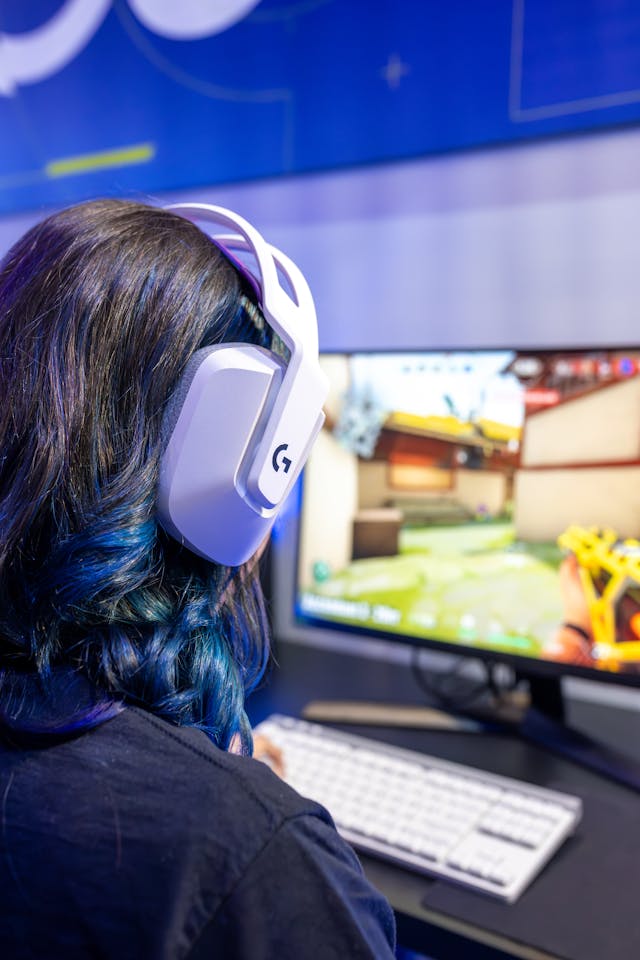
How Women Are Finding Confidence, Mental Strength, and Community Through Call of Duty Mobile
Empowerment after 50 is not about slowing down — it’s about choosing how you show up in the world. Yet across many cultures, women entering midlife are still surrounded by quiet expectations: be less visible, take up less space, stop trying new things. These messages may differ from country to country, but their impact is widely shared.
At the same time, something powerful and unexpected is happening. Women — especially those over 50 — are finding new confidence, focus, and connection in places traditionally seen as off-limits. One of those places is gaming.
A fast-paced game like Call of Duty Mobile may not seem like an obvious source of empowerment. Yet for many women, it offers exactly what midlife often needs: challenge, mental stimulation, social interaction, and a clear sense of progress. Gaming becomes more than entertainment. It becomes a reminder that learning, competitiveness, and joy do not have an age limit.
This article explores how women gamers — particularly older women — are navigating male-dominated spaces, supporting their mental wellbeing, and reshaping ideas about aging, ability, and confidence. Not by asking for permission, but by stepping into the game and claiming their place.
Gaming Has No Age Limit — and Women Are Claiming Their Space
Women now make up nearly half of all gamers worldwide, and mobile gaming is one of the most popular ways women engage with games. Titles like Call of Duty Mobile fit easily into modern adult lives, offering flexibility, social interaction, and meaningful challenge without requiring expensive equipment or long uninterrupted play sessions.
For women over 50, gaming can feel quietly radical. Many did not grow up seeing themselves represented in gaming culture. Picking up a competitive game later in life becomes an act of self-belief — a decision to stay mentally engaged, curious, and capable.
Crucially, success in games like Call of Duty Mobile is not based purely on fast reflexes. Strategy, map awareness, teamwork, emotional control, and decision-making matter just as much — skills that often strengthen with age. Older women frequently report feeling competent and confident in play, even in competitive environments.
Navigating Male-Dominated Spaces Without Losing Yourself
Despite progress, online gaming environments can still feel unwelcoming to women. Research consistently shows that women experience higher levels of harassment, dismissive behaviour, and unwanted attention during online play. This can be especially pronounced in competitive multiplayer games.
However, many women — particularly those over 50 — develop strong coping strategies grounded in self-assurance and boundaries. Life experience brings perspective, resilience, and a reduced need for external validation.
Common approaches include:
- Playing with trusted friends or regular squads
- Using voice chat selectively or confidently
- Muting or blocking disruptive players without hesitation
- Prioritising enjoyment and personal goals over others’ opinions
These strategies are not about avoidance; they are about autonomy. Gaming becomes a space where women decide how they engage, what behaviour they tolerate, and where their energy goes.
Gaming and Mental Wellbeing: Strength, Not Escape
Gaming is often misunderstood as passive or isolating. In reality, research increasingly shows that moderate gaming can support mental wellbeing, particularly for adults.
For many women over 50, gaming offers:
- Stress relief through focused engagement
- Improved mood and emotional regulation
- A sense of progress and achievement
- Social connection and shared purpose
Multiplayer games add a powerful social layer. Team-based play encourages communication, cooperation, and belonging — all key protective factors for mental health. This can be especially meaningful during life transitions such as menopause, retirement, caregiving changes, or relocation.
Gaming also supports cognitive engagement. Strategy, attention, memory, and rapid decision-making are constantly exercised, helping women feel mentally sharp and capable.
Confidence Through Mastery: Why Gaming Feels Empowering
Learning something new later in life carries deep psychological value. Each improvement, win, or lesson learned in a game reinforces a simple but powerful truth: growth does not stop with age.
Women often report that gaming confidence spills into other areas of life. Problem-solving feels easier. Assertiveness increases. Trying new things feels less intimidating.
For women who have spent years prioritising others, gaming can also be a rare space of personal agency — something done purely for enjoyment, challenge, and self-expression.
This is empowerment in practice, not theory.
Representation Is Growing — and It Matters
As more women openly identify as gamers, stream gameplay, or form inclusive communities, the image of who gaming is for continues to expand. Older women gamers challenge both ageism and sexism simply by being visible, skilled, and unapologetic.
Their presence helps reshape gaming culture into something richer, more diverse, and more respectful — benefiting everyone who plays.
Why This Matters for the Nomadify Community
Nomadify is about freedom, curiosity, wellbeing, and living fully at every stage of life. Gaming fits naturally into this mindset.
For women over 50, gaming can be:
- A mental workout
- A social bridge
- A confidence builder
- A reminder of personal power
It is not about competing with younger players. It is about staying engaged, mentally strong, and open to new experiences.
The Takeaway: Empowerment Has No Expiry Date
Women gamers are not a niche. Older women gamers are not exceptions. They are part of a growing movement that refuses to accept outdated ideas about aging, ability, or relevance.
If you have ever wondered whether you are “too old” to try something new, gaming offers a simple answer: you are not.
You are allowed to play.
You are allowed to learn.
You are allowed to take up space — on the screen and beyond.
And in doing so, you may discover a new source of confidence, connection, and empowerment — one match at a time.
Love Life & Discover Yourself x
References
- Cardiff University – Women experience guilt, shame and exclusion in gaming culture
https://www.cardiff.ac.uk/news/view/2958451-women-experience-guilt-shame-and-exclusion-in-gaming-culture-study-finds - International Journal of Environmental Research and Public Health – To Be or Not to Be a Female Gamer
https://www.mdpi.com/1660-4601/19/3/1169 - Women in Games UK – Over half of women gamers experience online abuse
https://www.womeningames.org/over-half-of-women-gamers-experience-online-abuse-new-research/ - Women in Games UK – Women gamers remain dedicated while fighting for change
https://www.womeningames.org/women-gamers-dedicated-still-fighting-for-change/ - PubMed – Gaming motivation, social connection and wellbeing in adult gamers
https://pubmed.ncbi.nlm.nih.gov/38666068/ - PubMed – Video games, cognitive engagement and emotional regulation
https://pubmed.ncbi.nlm.nih.gov/31354536/ - Entertainment Software Association – Essential Facts About the Video Game Industry
https://www.theesa.com/resource/essential-facts-about-the-video-game-industry/ - The Guardian – How video games help older adults stay mentally active
https://www.theguardian.com/lifeandstyle/2023/nov/05/video-games-older-people-brain-health - Black Girl Gamers – Community and advocacy organisation
https://blackgirlgamers.co.uk/