
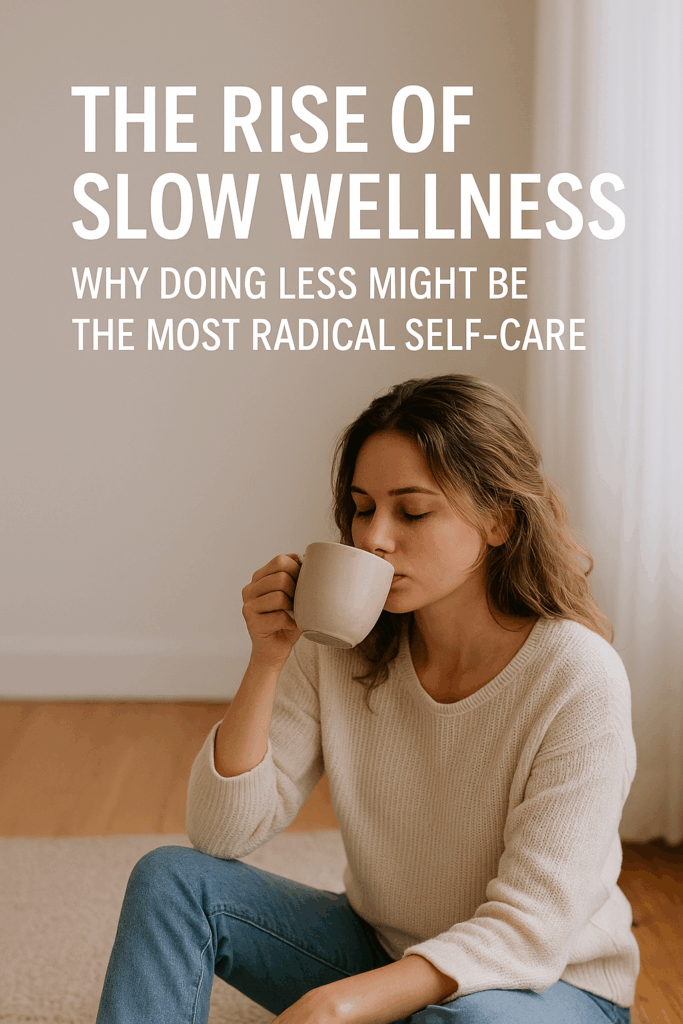
If your mornings start with a green smoothie, a meditation app, and a list of self-improvement tasks — and you still feel drained — you’re not alone. Modern wellness often looks like a checklist, a series of things to do to be better, calmer, healthier. And yet, for many of us, it leaves us more exhausted than inspired.
Enter slow wellness, the gentle rebellion against hustle culture disguised as self-care. It’s not about squeezing more productivity or optimization into your day. It’s about slowing down, paying attention, and finding depth in the ordinary. In a world that prizes doing more, slowing down might just be the most radical act of all.
What Slow Wellness Really Means
Slow wellness isn’t a trend, a specific ritual, or a luxury retreat. It’s a philosophy, a way of living that values presence over performance, attention over speed, and being over doing.
Where “hustle wellness” measures success in steps, calories, supplements, or biohacks, slow wellness asks a different question: Am I here? Am I noticing this moment? Am I giving myself space to breathe?
This might look like:
- Slow mornings: Waking up without an alarm clock, savoring a cup of tea, journaling your thoughts.
- Mindful cooking: Transforming meal prep into meditation, noticing colors, smells, and textures.
- Walking without purpose: Listening to the city or the forest instead of a podcast.
- Micro-rests: Pausing for a few minutes during a busy day just to breathe or stretch.
It’s about turning everyday acts into rituals of care, whether it’s folding laundry, washing dishes, or making a cup of tea. Small pauses add up, gradually shifting your energy, focus, and emotional state.
Why Slowing Down Works
There’s a science to slowing down. Chronic stress, constant digital stimulation, and an “always-on” lifestyle keep our nervous systems on high alert. Intentional pauses — even just a few minutes — can reduce cortisol, calm the nervous system, and improve focus.
Mindfulness and slow practices also align with natural circadian rhythms and energy cycles. Working against these rhythms leads to fatigue, while moving in sync with them supports clarity, creativity, and emotional resilience.
In short, slowing down isn’t indulgent. It’s biologically and psychologically restorative.
How Slow Wellness Shows Up in Everyday Life
Slow wellness isn’t about radical change or grand gestures. It’s in the subtle, consistent practices that transform ordinary moments into sources of presence and care.
- Micro-rests: Pause between tasks to stretch, breathe, or simply notice your surroundings.
- Mindful meals: Eat without distraction, noticing texture, taste, and aroma.
- Digital declutter: Step away from your phone or computer for short, intentional periods.
- Ritualizing routine: Even chores like washing dishes or folding clothes can become moments of mindfulness if approached with attention.
These practices don’t require extra time, only intentionality. They create space in our over-scheduled days for reflection, connection, and emotional replenishment.
Stories of Slow Wellness in Action
Take Maya, a 32-year-old designer living in a bustling city. She used to rush through mornings, scroll endlessly on her phone, and check items off her to-do list, all while squeezing in workouts and self-care rituals. Despite following the “rules” of wellness, she felt perpetually exhausted.
When Maya experimented with slow wellness, she reclaimed her mornings: a quiet five-minute meditation, a slow cup of tea, and a brief walk before work. She noticed small but profound changes: a calmer mind, more focus at her desk, and a renewed sense of connection to her day.
Then there’s Leo, a father of two, who transformed mundane household tasks into opportunities for presence. Folding laundry or washing dishes became mini meditations, moments where he could pause, breathe, and notice his surroundings. Over time, these small rituals softened the edges of a hectic day and gave him back energy he didn’t realize he was losing.
Why Slow Wellness Matters Now
In 2025, burnout and overstimulation are near-universal experiences. Slow wellness offers a simple, sustainable antidote: presence and intentionality.
Slowing down doesn’t mean abandoning ambition or productivity. It means aligning your pace with your natural energy, noticing life’s textures, and creating space for reflection.
Through slow wellness, we:
- Reduce stress and anxiety
- Improve focus and emotional resilience
- Deepen connections with others
- Discover joy in ordinary moments
It’s a shift from constant doing to mindful being — a quiet resistance to a culture obsessed with speed.
Starting Small — No Overhaul Required
The beauty of slow wellness is its accessibility. You don’t need a new routine or expensive tools. Start with one or two small practices:
- Pause before your phone: Spend five minutes in the morning without checking messages or emails.
- Mindful eating: Choose one meal to eat fully present, noticing every bite.
- Micro-breaks: Take three small pauses during your day to stretch, breathe, or simply notice your surroundings.
Even minor shifts can compound. One mindful moment can ripple through your day, creating more calm, clarity, and presence.
Doing Less as Radical Self-Care
In a culture obsessed with productivity, doing less is quietly revolutionary. Slow wellness teaches us to value presence over performance, quality over quantity, and being over doing.
It’s in the simple, everyday acts — sipping tea without distraction, noticing sunlight on your desk, folding laundry with intention — that we reclaim our energy, our attention, and our humanity.
Doing less isn’t laziness. It’s radical self-care, a personal rebellion against a world that prizes speed over presence.
Slow wellness reminds us that life isn’t only about achieving more. It’s about showing up for yourself, noticing the details of your day, and savouring them — one mindful breath, step, or sip at a time.