
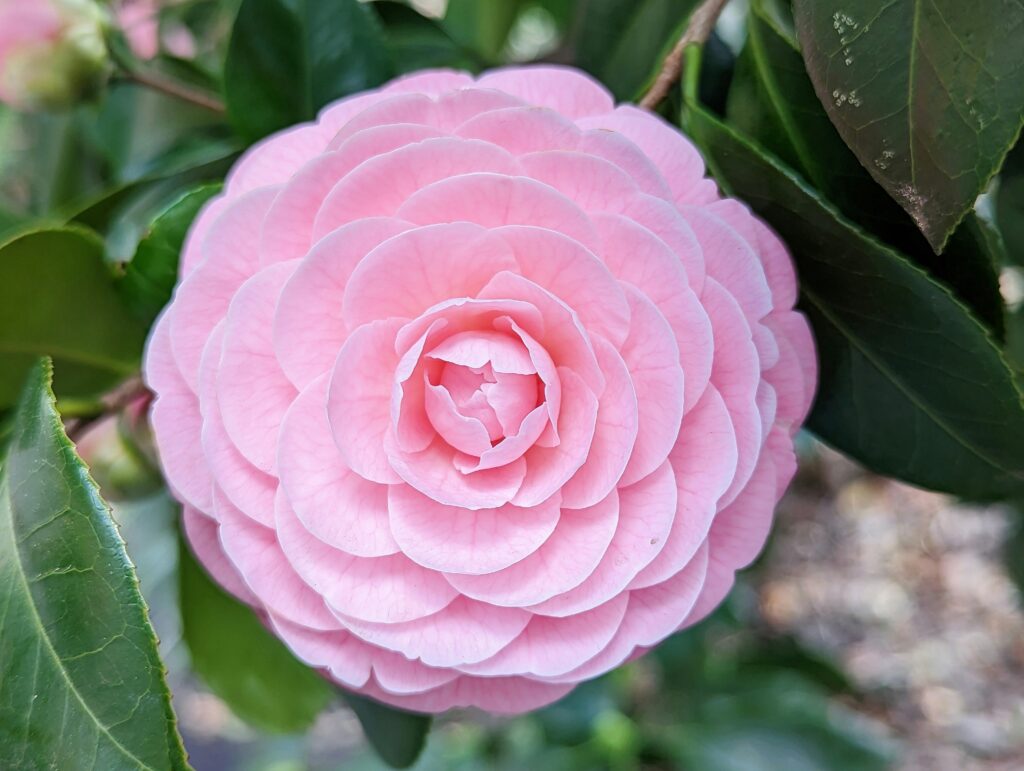
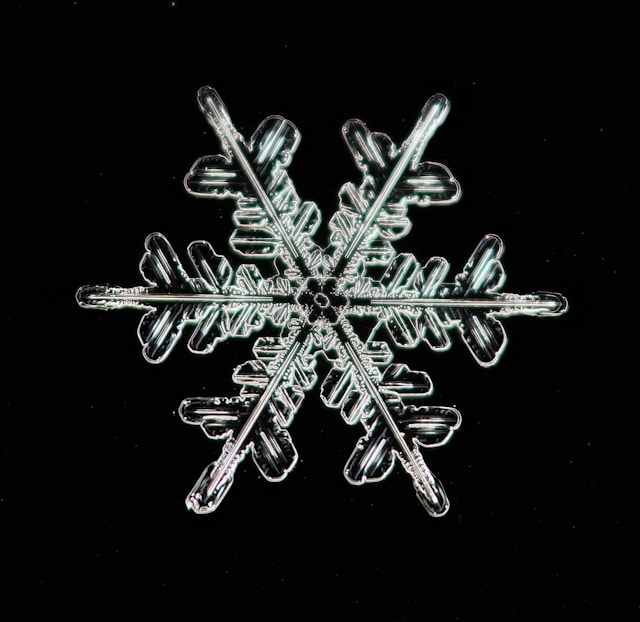
Throughout history, humans have looked to patterns in nature to make sense of life’s mysteries. We see spirals in seashells, symmetry in snowflakes, and branching forms in rivers, lungs, and trees. These recurring structures feel deeply familiar, as if they echo an ancient wisdom written into the very fabric of the universe. Sacred geometry is the study and application of these shapes and patterns, and for centuries it has been revered as both a spiritual key to understanding creation and a practical guide in art, architecture, and healing. Today, it continues to inspire those seeking balance, harmony, and a sense of connection in their everyday lives.
At its core, sacred geometry suggests that geometry is more than mathematics—it is the language of the cosmos. Every spiral, curve, and symmetry reveals a glimpse of how energy flows and how life unfolds. Ancient cultures across Egypt, Greece, India, and Mesoamerica all recognized these shapes as sacred, embedding them into temples, monuments, and artworks designed to resonate with cosmic order. The modern fascination with sacred geometry reflects a growing desire to reconnect with that same sense of order, finding meaning not just in what we see but in how we live within these patterns.
One of the most iconic examples is the Flower of Life, a symmetrical figure composed of overlapping circles forming a flower-like pattern. Found etched into Egyptian temples, medieval churches, and even in Leonardo da Vinci’s sketches, the Flower of Life is often seen as a symbol of creation itself. Its design is thought to represent the cycle of life, showing how everything emerges from a single point of origin and expands outward in perfect balance. Meditating on or incorporating this pattern into a living space can bring a sense of unity and calm, as if reminding us of our place in the interconnected web of existence.
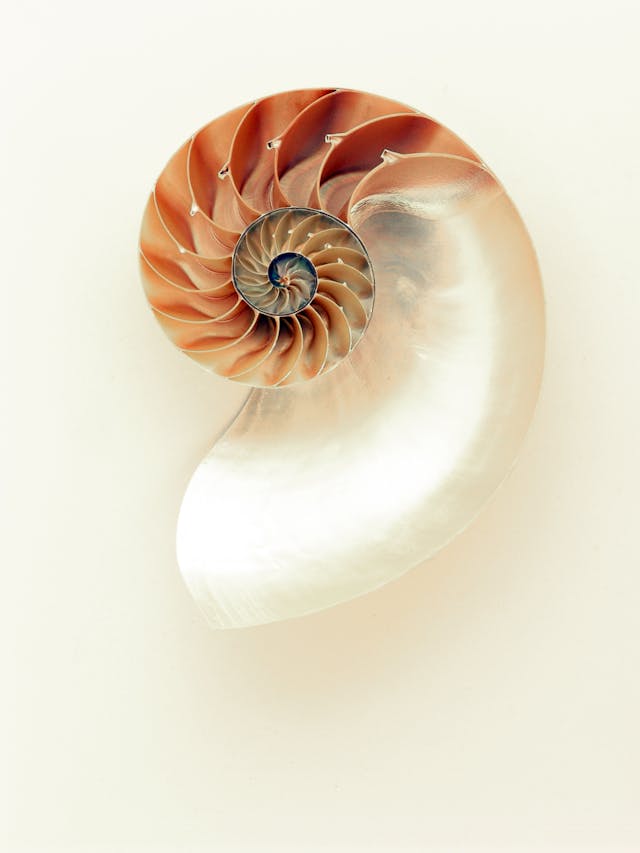
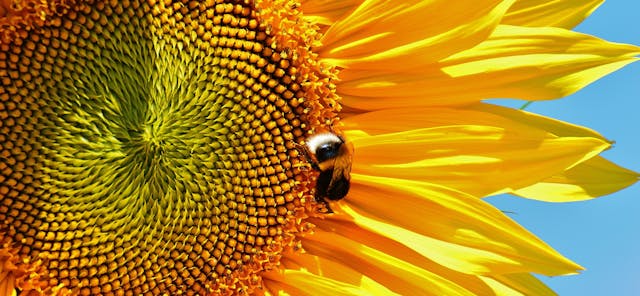
Equally fascinating is the Fibonacci sequence, a series of numbers where each is the sum of the two before it. The visual expression of this sequence is the Fibonacci spiral, which mirrors natural growth patterns seen in pinecones, nautilus shells, sunflowers, hurricanes, and even galaxies. For mystics, the sequence demonstrates divine order within creation, while scientists see it as evidence of efficient design in nature. When brought into architecture and interior spaces, Fibonacci-inspired spirals can evoke feelings of expansion, flow, and organic beauty, making environments feel more “alive.”
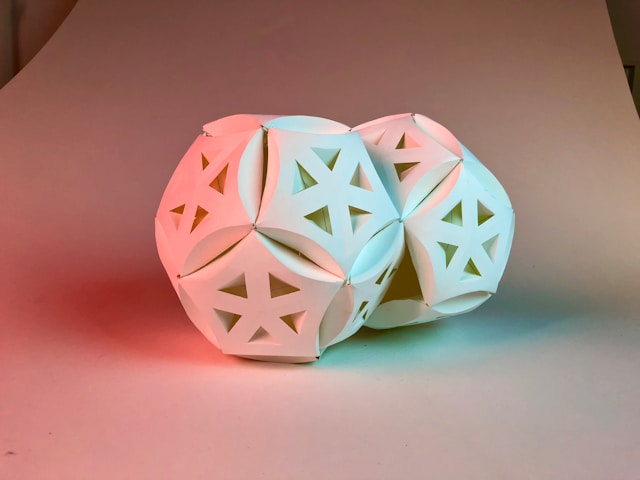
The Platonic solids—five geometric forms including the cube, tetrahedron, octahedron, dodecahedron, and icosahedron—are another cornerstone of sacred geometry. Plato associated each shape with an element: earth, fire, air, ether, and water, respectively. These shapes are found in crystals, molecular structures, and even DNA. Mystically, they are seen as building blocks of the universe, embodying harmony, proportion, and balance. Their use in crystal grids, meditation tools, or even in design motifs allows people to align themselves with elemental forces and universal order.
It is not only spiritual traditions that recognize the power of geometry. Neuroscience and psychology suggest that humans are naturally drawn to symmetry and fractal patterns because they reduce cognitive load and induce calm. Studies have shown that fractals—repeating patterns found in trees, coastlines, and even abstract art—can reduce stress by up to 60% when viewed over time (Taylor et al., 2006). This suggests that surrounding ourselves with geometric harmony is not just mystical—it has measurable effects on our nervous system and mental well-being. Similarly, architecture based on symmetry and proportion has long been linked to human comfort, whether in Gothic cathedrals or Japanese Zen gardens.
The practical application of sacred geometry in modern life can be both simple and profound. You don’t need to live in a pyramid or cathedral to experience its effects. Adding mandalas—circular designs symbolizing wholeness—into a meditation corner can focus the mind and deepen mindfulness. Crystal grids arranged in geometric formations can be used to channel intention, with each stone amplifying energy through the pattern it creates. Incorporating geometric artwork, wall hangings, or even patterned textiles into your home can subtly encourage harmony. For those inclined toward creativity, arranging plants, furniture, or decorative items in balanced or spiral patterns can foster a sense of flow in the environment. Even yoga and movement practices can embody sacred geometry, as the body itself becomes part of patterns of alignment and balance.
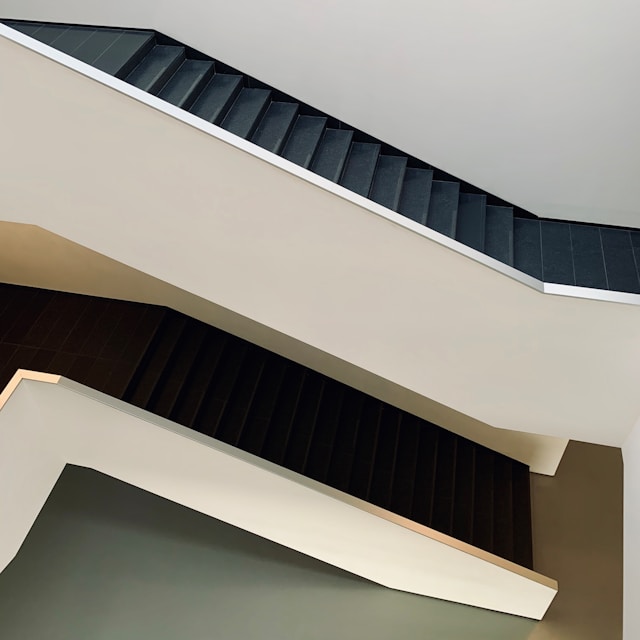
On a larger scale, sacred geometry has been woven into architecture for centuries with the intention of healing and elevating the human spirit. The Great Pyramid of Giza, Stonehenge, the Parthenon, and the temples of Angkor Wat all reflect geometric principles designed to harmonize earthly structures with celestial forces. Gothic cathedrals, with their rose windows and vaulted arches, were designed not only for grandeur but to inspire awe and spiritual connection through geometry. Modern architects are reawakening to these ideas, integrating natural ratios and biomimicry into sustainable design that supports both human well-being and ecological harmony.
What makes sacred geometry so enduring is its ability to connect multiple ways of knowing. To the mystic, it is a spiritual key; to the scientist, it is a universal constant; to the artist, it is beauty in its purest form. This convergence makes it a powerful tool for healing spaces, bridging the physical and metaphysical. Whether or not you believe in the mystical properties of these patterns, their presence undeniably shapes how we feel, think, and interact with our environment.
Incorporating sacred geometry into your home or practice can be as subtle or as intentional as you wish. For some, it may mean meditating with a Flower of Life mandala or arranging crystals in a grid. For others, it may mean appreciating the fractal beauty of a fern on a walk or choosing architectural features that reflect symmetry and flow. Each act is a way of aligning with the harmony that runs through all of life.
In a world that often feels chaotic, sacred geometry offers a reminder of balance and continuity. It whispers that beneath the surface, there is order, beauty, and connection waiting to be noticed. By surrounding ourselves with these patterns—whether through art, architecture, or mindful arrangement—we invite not just aesthetic harmony but also a deeper sense of peace and alignment into our lives. Sacred geometry reminds us that healing is not separate from the spaces we inhabit; rather, it is woven into the very fabric of the universe, waiting for us to recognize and embody it.
Love Life & Discover Yourself x
References
- Taylor, R.P., Spehar, B., Van Donkelaar, P., & Hagerhall, C.M. (2006). Perceptual and physiological responses to the visual complexity of fractal patterns. Nonlinear Dynamics, Psychology, and Life Sciences, 10(1), 27–52.
- Livio, M. (2002). The Golden Ratio: The Story of Phi, the World’s Most Astonishing Number. Broadway Books.
- Lawlor, R. (1989). Sacred Geometry: Philosophy and Practice. Thames & Hudson.
- Padovan, R. (1999). Proportion: Science, Philosophy, Architecture. Taylor & Francis.
- Critchlow, K. (1976). Order in Space: A Design Source Book. Thames & Hudson.
- Alexander, C. (2002). The Nature of Order: An Essay on the Art of Building and the Nature of the Universe. Center for Environmental Structure.